Indoor Air Quality: Natural Ventilation & Greenery Strategies
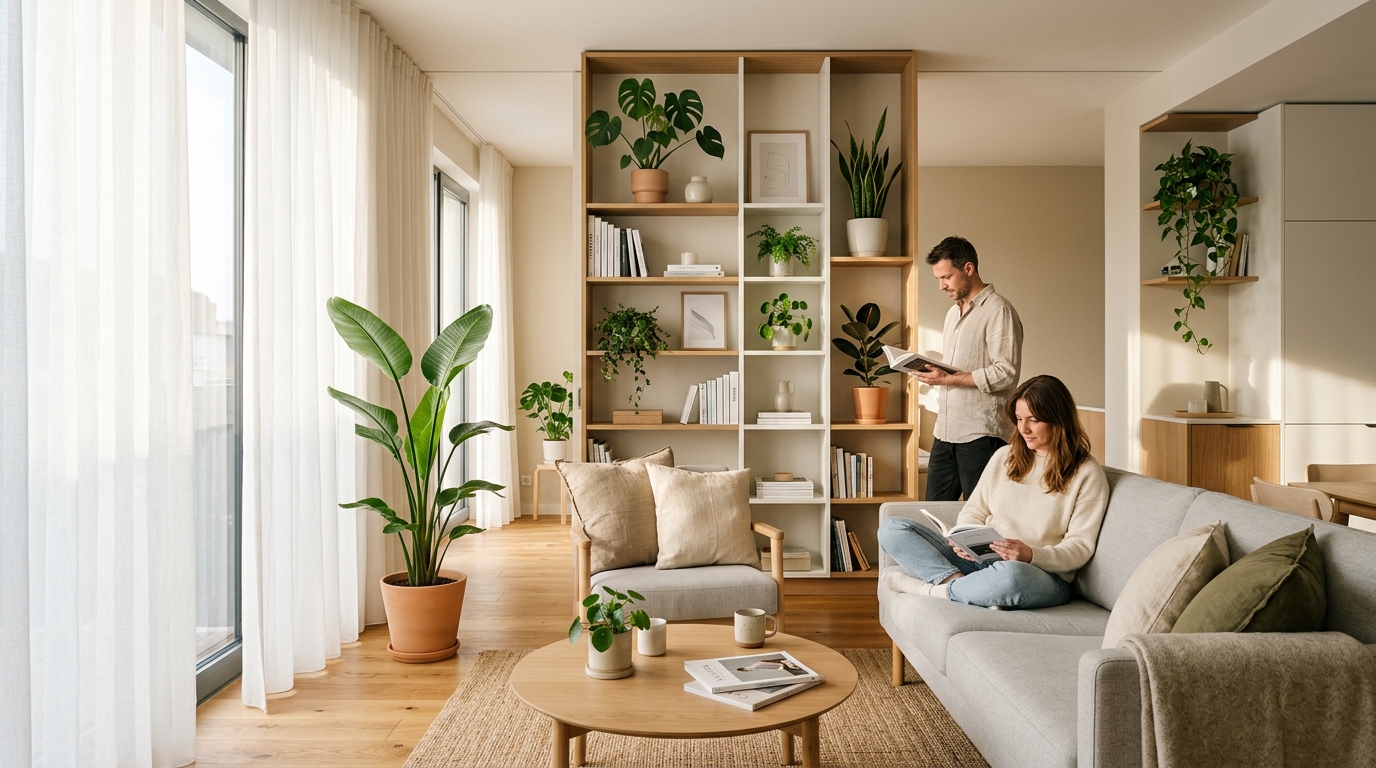
Modern buildings are engineered for energy efficiency and thermal insulation. While this helps keep heating and cooling costs down, it frequently turns our living rooms and bedrooms into airtight chambers where indoor pollutants accumulate. According to environmental agencies, indoor air can carry two to five times higher concentrations of airborne particulates, volatile organic compounds (VOCs), and carbon dioxide than outdoor air.
Experiencing midday brain fog, dry eyes, or restless sleep often traces back to stale indoor atmospheres. Fortunately, revitalizing your home’s air does not require expensive industrial machinery. By adopting deliberate natural ventilation protocols and strategic greenery, you can transform your domestic breathing environment.
Understanding Common Household Air Contaminants
Before implementing solutions, it helps to understand what commonly circulates in our indoor spaces:
- Volatile Organic Compounds (VOCs): Emitted by synthetic upholstery, fresh paint, pressed-wood furniture, and commercial cleaning sprays.
- Carbon Dioxide (CO2): Exhaled continuously by household occupants. In unventilated rooms, CO2 levels frequently exceed 1,200 ppm, directly impairing cognitive focus and sleep depth.
- Particulate Matter (PM2.5): Microscopic soot and grease particles generated during stovetop cooking, candle burning, and fireplace use.
The “Stoßlüften” Shock Ventilation Protocol
Rather than leaving a small window cracked all day—which chills walls and wastes energy—embrace the proven German technique of Stoßlüften (shock ventilation):
- Open windows fully on opposite sides of your living space to create a brisk cross-breeze.
- Leave them wide open for precisely 5 to 10 minutes, twice daily (once upon waking, and once before bedtime).
- Close the windows firmly.
This rapid air exchange flushes out stale CO2 and airborne moisture without cooling down furniture or structural walls, maintaining indoor warmth while renewing atmospheric freshness.
Strategic Indoor Plants for Household Vitality
While potted plants cannot replace active ventilation, they contribute humidity regulation, psychological calm, and modest micro-climate filtering:
| Plant Variety | Care Difficulty | Ideal Household Placement |
|---|---|---|
| Snake Plant (Sansevieria) | Extremely Low (Drought-tolerant) | Bedrooms; releases oxygen overnight via CAM photosynthesis. |
| ZZ Plant (Zamioculcas) | Extremely Low (Thrives in shade) | Hallways, home offices, and low-light corners. |
| Boston Fern | Moderate (Requires moisture) | Bathrooms; serves as a natural humidity buffer. |
Kitchen Air Quality: The Unsung Hazard
Cooking—especially searing proteins or frying with high-heat oils—is the largest single generator of indoor particulate pollution. Always turn on your range hood exhaust on its highest setting before heating the skillet, and keep it running for five minutes after cooking completes. When searing, crack a nearby window to prevent grease particles from settling across living room upholstery.
Conclusion
Cleaner indoor air does not require extreme lifestyle overhauls. By introducing the 10-minute shock ventilation habit each morning and positioning a resilient snake plant near your bed, you establish a restorative breathing environment that supports restful sleep and clear daytime energy.
Discover how sleep environment influences restorative recovery in Sleep Hygiene Fundamentals: Practical Habits for Restful Nightly Recovery.